Showing posts with label Reading Notes. Show all posts

Friday, May 5, 2017

Reading Notes: The Wonderful Teakettle

Teakettle
Picture by pureedensalon
Source: Flickr

Wow, this was such a cute and somewhat odd story. I would never think to have a teakettle be a living thing, but imagination is key to any fairytale! This story took me back to my childhood days when I would watch Blues Clues, and there would a talking salt and pepper, or Dora the Explorer that had a talking backpack. There are so many things I could do with this story. I want to keep the teakettle, but instead of having it be a badger I would like for it to just be personified—meaning the teakettle would be a talking, moving object! I picture the teakettle to kind of be like the teapot in Beauty and the Beast! The new Beauty and the Beast with Emma Watson.

I feel like tea is a big tradition in the Japanese culture. I want to keep this theme alive in my own story. I want this teakettle to bring wealth and good health to a poor family in Japan in my story! I want my story to be creative by using a lot of unrealistic things like the teakettle being able to talk first, and then the chopsticks, and then the bowls!

The family in my story will struggle with starvation. The teakettle will be the hero in this story. Yes, the teakettle will be a boy! However, he will be a child. However, the family will keep this teakettle for generations and generations. The teakettle will represent struggle, but wealth in the smallest of things like tea. I think this would be a cute story to write that can relate to kids and adults! I think tradition is really important, so I want this to also be a lesson. I’m sure all of us have a little something from our past that we hold on to that is represented in an inanimate object, so hopefully this story can relate to all my readers.

Bibliography: Japanese Fairy Tales, "The Wonderful Teakettle" by Teresa Peirce Williston


Monday, April 24, 2017

Reading Notes: Pattanaik's Calendar Art Part F (Brahma)

Brahma 
Brahma
Picture by Unknown
Source: Wikipedia

Brahma is a god that never gets to be worshiped because he forgot the reason behind creation. This is a completely new concept for me, but definitely an interesting topic! Brahma wanted to understand who he was. In the end, he loses himself while chasing after his own daughter. I think what Brahma’s lesson is that you can lose yourself by chasing after materialistic things—a real problem in the real world today. I want this to be the lesson in my own story, and have Brahma be the main character on a journey. The story will show where this journey leads to.

Brahma’s daughter will also be one of the main characters. She is supposed to represent energy, matter, and life in the original story. I want her to represent materialism in my story. I think this will help in making the lesson in my story show. She will be a very simple, sophisticated, intelligent woman.

I feel like this will be a very dramatic story to write. I also like how Brahma creates the private, the public, and the rest. I think will go hand in hand with the lesson in my story. I want to make it unique with dramatic scenes, and possibly an ironic ending for a twist. I look forward to writing this, and trying to create Brahma’s character into something that we all experience every now and then. I feel this will make my story easy to understand and follow. I’m still debating on if I want dialogue in my story because I want it to just portray Brahma’s internal struggle.

Bibliography: Devdutt Pattanaik's Seven Secrets from Hindu Calendar

Reading Notes: Pattanaik's Calendar Art: Part E (Vishnu)

CH cow 2 cropped.jpg 
Godaan
Picture by Daniel Schwen
Source: Wikipedia 

This video is explains the concept of cows in the Hindu religion. Eating beef is something that is definitely not allowed. I’ve always wondered what exactly the reasons were behind this, and I feel this video explains in better detail. Cows were a great resource for the gods and goddesses. They allowed them to have shelter, food, wealth, etc. This was done through using their milk for food, skin for accessories, bones for tools, and more. That explains why they were so cherished. Godaan is an interesting topic I want to keep in my story. It’s a charity that could fulfill any need.

Vishnu will be my main character in this story that takes care of the queen cow. I think this will be a really fun story to write because I want the animals to be able to talk to one another in my own story. I want it to be like children’s book. The setting will be at a farm. I want the story to project the meaning behind godaan with unrealistic scenes taking place—like a children’s book. I want to include vivd imagery of the animals, and some dialogue.

This will be a fun topic for me to explore and write about because it’s something I’ve always been interested in, but never got the chance to really look into. This video has definitely helped me a lot in understanding what godaan means, and what is so significant about cows in the Hindu religion.

Bibliography: Devdutt's Pattanaik's Seven Secrets from Hindu Calendar Art


Wednesday, April 19, 2017

Reading Notes: Pattanaik's Calendar Art Part D (Shiva, Devi)

 
Sati
Picture by Unknown
Source: Wikipedia

Wow, I would describe part two of Shiva’s story as nothing but intense. Shiva becomes a householder after Sati induces him, and is now Shankara. The concept of social order is interesting in this part because there is no such thing as order in what Shiva did—he beheaded his father-in-law. I think this story has a lot to do with civilization and what is accepted in society. I want my story to portray this concept with the character’s intense scenes still there, but with a twist.

I think Devi is one of my favorites. This video about Devi starts off by saying “desire and destiny create life.” I love this concept. I want this to show in my own story. I also like how there was a wedding that never happened. I think this would add suspense to my own story. A married goddess uses her energy to keep her home well, but according to this video an unmarried woman uses her energy to protect—what an interesting concept!

The concepts in this tale can be applied to the real world today, and I would like to portray these stories to show a relatable idea in my own story. I look forward to using these ideas in my own story for this week.
 
Bibliography: Devdutt's Pattanaik's Seven Secrets from Hindu Calendar Art
 

Wednesday, April 12, 2017

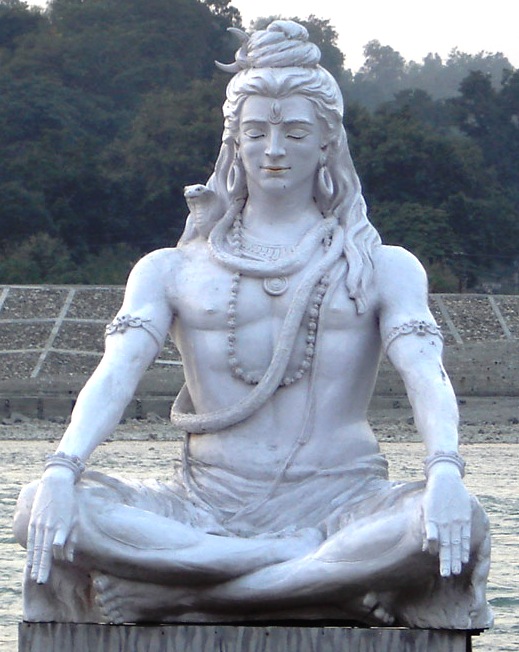
Reading Notes: Pattanaik's Calendar Art, Part C (Ardhanari, Shiva)

Shiva meditating Rishikesh.jpg 
Shiva
Picture by Iqbal Mohammed
Source: Wikipedia

Wow, this was definitely an interesting watch. I think the concept of focusing of a form instead of thought is something we tend to do a lot, but forget that thought is sometimes bigger than what is represented. Ardhanari basically means that god is within and does not move. However, a goddess is what is moving. Males are represented with action, and females represented with internal ideas like knowledge and power. I think this is an interesting concept to think about. I could use the idea of the difference between a god and goddesses, and create a story representing these ideas.

I would like to keep materialistic things in my story like plants, but the plants representing something much more valuable than a still object seen with the eye. I feel this will be a great story to really put my imagination to work while representing the true meanings learned from this video.

I want Shiva, the destroyer, to also be in my story. However, I want his character to represent someone that would never destroy anything. I think this will add drama, and a sort of mystery of who the destroyer really was in my story. I look forward to taking my teachings from the video and writing my own story!

Bibliography: Devdutt Pattanaik's Seven Secrets from Hindu Calendar Art

Wednesday, April 5, 2017

Reading Notes: Pattanaik's Calendar Art, Part B (Narayan)

Narayana 
Narayan
Picture by Benjamín Preciado
Source: Wikipedia

Wow, I think this video had so much knowledge to share. I think my favorite part about this video was the very beginning when the concept of reincarnation is introduced. The video starts off by saying how there is only a single life in the Greek, Muslim, and Christian religion. However, rebirth is an aspect of life for Hinduism. I think the most interesting difference in all these religions was how Greeks desire to be heroes, Christians desire to be saved by God, and Muslims surrender to God because the belief is there is only one life. However, Hindus believe there are many lives and worlds.

Sesha was a deep concept for me to understand. However, I took away that Sesha is basically the remains after everything else is gone, and Narayan sleeps on Sesha. Narayan is like the ultimate observer. He observes pretty much everything, but only when he is awake. If I were to write a story on Narayan, I would create a world the Narayan does observe in his sleep unlike the original story. I could make it interesting by him not knowing what reality is.

There are a lot of things I could twist from the original story, and knowledge. Another element I would like to include in my story is Lakshmi. She will be the answer to all the questions in my story. I want her to symbolism the lesson in my own story. I want the lesson to be about observing what you are blessed with. I think it will tie in really well with Narayan since he symbolizes observation. I think this will be a very fun story to create because it will have bits and pieces of symbolism that relate to the original background story of Narayan and Lakshmi.

Bibliography: Devdutt's Pattanaik's Seven Secrets from Hindu Calendar Art

Tuesday, April 4, 2017

Reading Notes: Draupadi's Swayamvara, Part A


 File:Arjuna wins Draupadi.jpg
Arjuna and Draupadi
Picture by Unknown
Source: Wikimedia

I thought this story was very interesting. A concept I would like to include in my own version is reincarnation. In a previous lifetime, Draupadi had five husbands, and she has five husbands in a different lifetime after praying about it. I want my main character to fall in love with only one of her five husbands because of the way he is. However, they all have to battle for her true love. I want this to be like a game. This will add action to my own story.

I feel the concept of sharing a woman in the original story was in a way sexist and degrading, so in my story I will Draupadi be extremely powerful. Her five husbands will not know how powerful she is. The only person that will know will be her true love by the end of the story and contest.

I think this will a fun story to write. I also want to include karma in my story. I know karma correlates to reincarnation. For example, if you do not commit any sins, you will reincarnate as a man in your next lifetime—being a boy is a big deal in these stories. I’m looking forward to what I can come up with! 

Bibliography: Narayan's Mahabharata, Reading Guide A


Wednesday, March 29, 2017

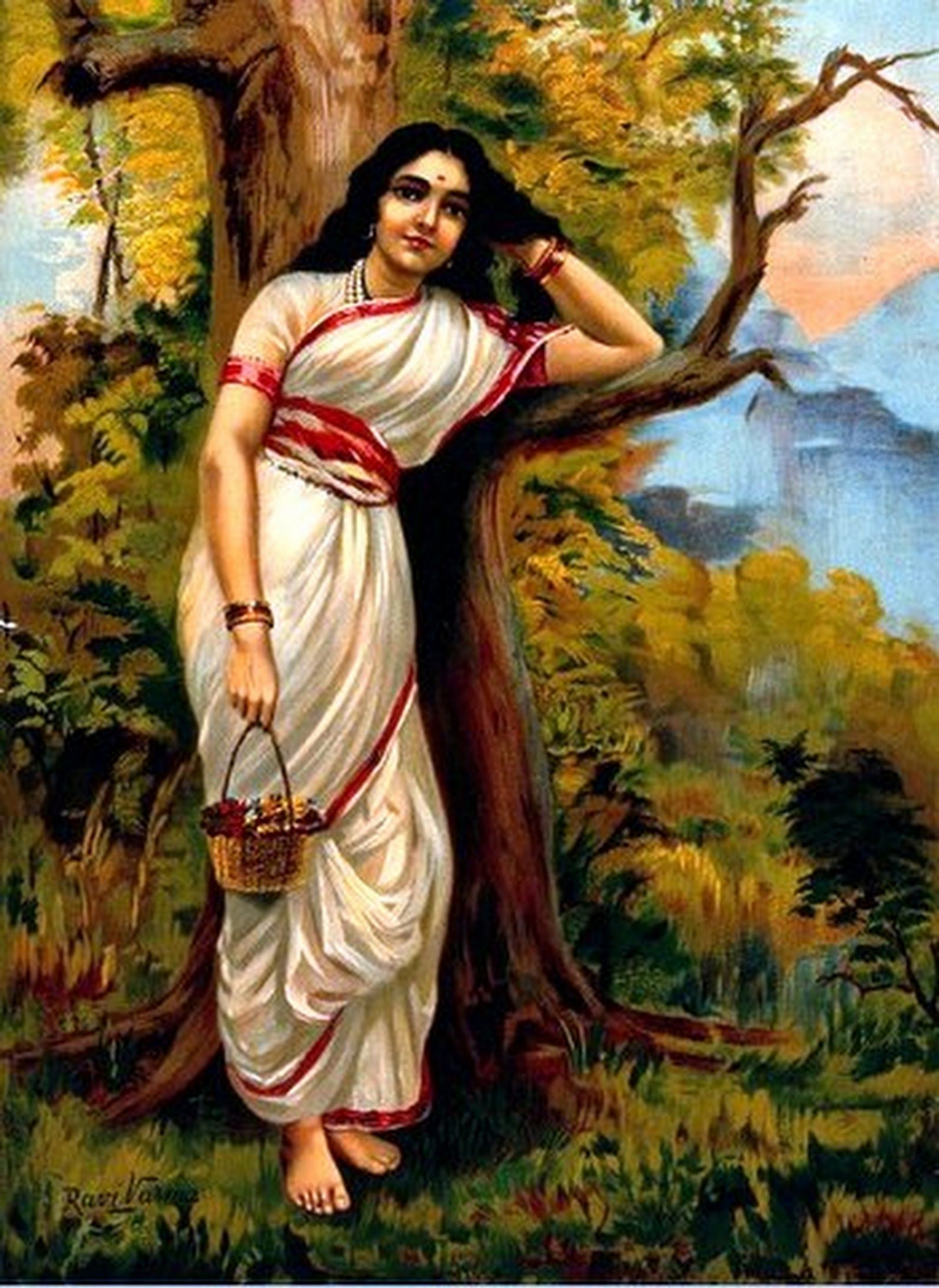
Reading Notes: Ahalya, Part B

A painting of a young fair woman clad in a white sari with a red border stands, leaning on a tree, as she moves her left hand through her long black hair and holds a flower basket in her outstretched right hand. 
Ahalya
Picture by Raja Ravi Verma
Source: Wikipedia 

Wow, this was a crazy story to read. There are a lot of things I would like to change in this story. For instance, I would change Indra turning into a stone when her husband finds his wife sleeping with him instead of Ahalya—his wife. It was not Ahalya’s fault she was being mislead by Indra. He disguised himself as her husband. I would like to keep Ahalya’s image as the perfect woman, and make her one of the most powerful goddesses. She will seek a divorce from her husband as revenge for accusing her of cheating.

I think this story provides a lesson for faith and trust. I want to make this the theme for my story. Instead of Ahalya’s husband turning her into a stone, he will ask her for clarification, and why she was sleeping with another man. There will be confrontation between the two characters in my story. I also feel there should be some type of punishment for Indra.

This would be a fun story to recreate with my own thoughts. I feel there is a lot of sexism involved in this story, and fingers being pointed at the woman. I want to make this something to be aware in my own words. 

Bibliography:  Narayana's Ramayana, Reading Guide B

Tuesday, March 28, 2017

Reading Notes: Tales of Ancient India, Part A

The end of Kans
Picture by Martadas Pirbudial
Source: Wikimedia 

I liked how this story opened up with a background of how great things were. King Ugrasen enjoyed a blissful kingdom, everything was fair and righteous in the world, and his people admired the Queen dearly. But, that joy turned to sorry when a son was born into the King's palace. This part I was confused about because I was under the impression that sons were favored over daughters in this time period, and especially in this culture. The great chaos that ensued due to a son being born was described in great detail making it sound as if the world was ending. I could take note of the imagery and details used in this story in order to apply it to my own writing so I can make the story come to life! So eventually, the astrologers told King Ugrasen that his son, Kans, will be a mighty ruler, but his kingdom will be filled with evil. He was also destined to die by the hands of Krishna due to his unethical ways.

Sure enough, by the time Kans was old enough to play and crawl, he would kidnap his playmates and take them up to the mountain and kill them. I thought this was intense and something interesting I could integrate into my own story. I'm really enjoying the contrast between how great things were at the beginning to how awful they are starting to become after the birth of Kans. The older he got, the more ruthless and brutal he became and the more people he killed. Needless to say, Kans was beginning to turn into a monster. He began to take over the kingdom, calling in demons and devils from all over. It got so bad that a plague ravaged the kingdom and killed many people. There was no beauty in the world anymore, only death and destruction. I think retelling this part of the story would be very moving and help draw readers in by the sheer detail I could add. I'm looking forward to using this story and making it my own!

Bibliography: Tales of Ancient India by Edmund Charles Cox

Wednesday, February 22, 2017

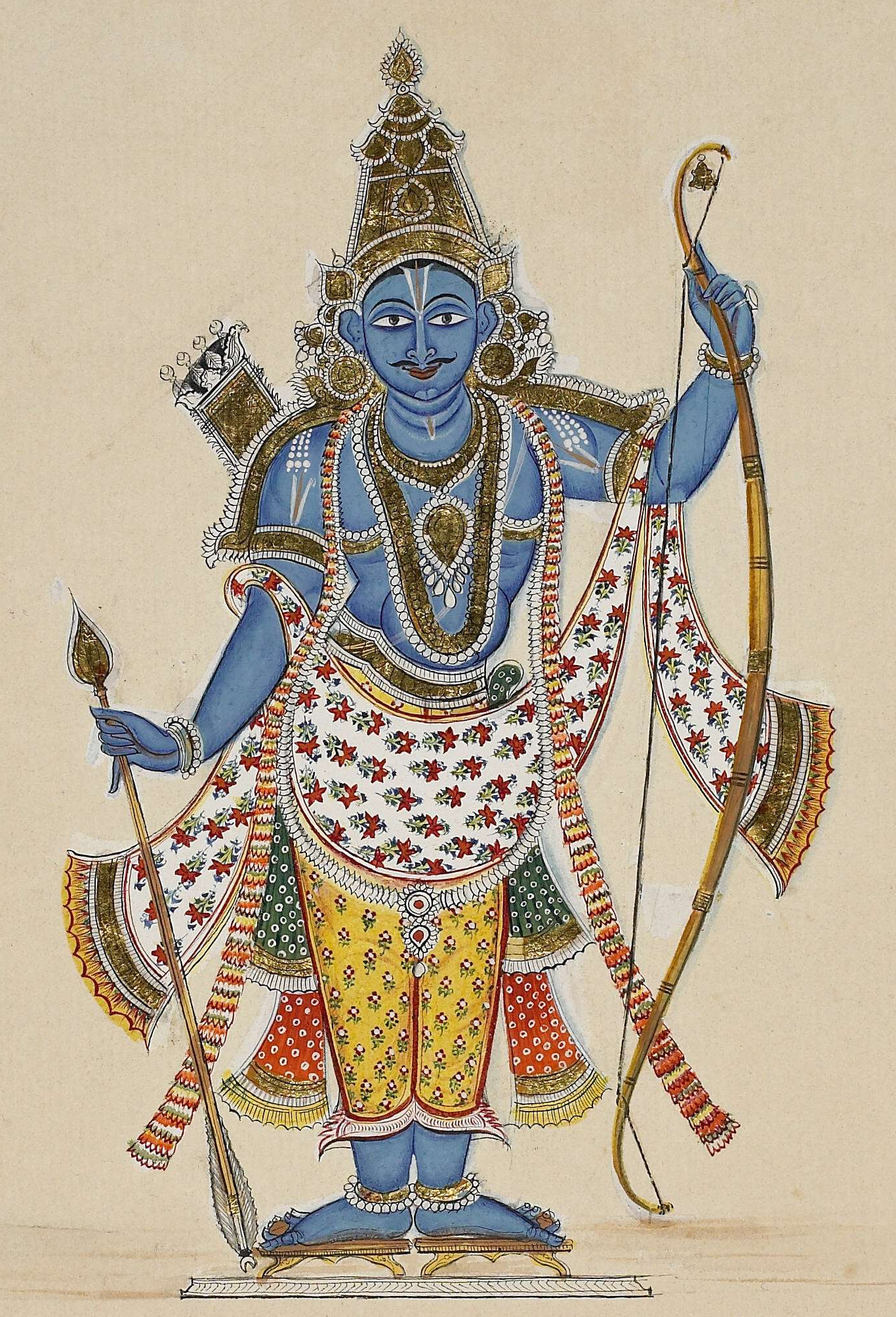
Reading Notes: Forest Life, Part B

Lord Rama with arrows.jpg 
Rama and the Forest
Picture by Unknown
Source: Wikipedia


I thought this story was really interesting, and almost like a new chapter for Rama. I feel like their were a lot of elements in this particular story that I would want to include in my own story like nature, animals, and materialistic things like jewelry like in the original. I think all these elements will create a lesson to be learned in my own story with Rama still being the main character.

One of my friends came to visit one day, and asked me three questions. One question was “What is your favorite color?” The next question was “What is your favorite animal and why?” The last question was “What do you think about nature, and how does it make you feel?” Little did I know, all these questions had different meanings? For example, I said my favorite color was red because it has multiple meanings like passion and anger and love. My favorite animal is a polar bear because they’re big, caring, and warm. My last answer was nature is calming and pretty. The meaning behind the first answer is how you describe yourself to be. The meaning behind the second answer was what you want to see in your significant other. Last but not the least, the meaning behind the last question was how you feel about god.

These questions really got me thinking about nature in particular, and how I want to be more adventurous, and be in touch with what god created. I feel like these three questions can be included somewhere in my story to add a twist of my own. I think it’ll be very fun to see how Rama develops in my own story, and what his favorite color, favorite animal, and his opinion about nature turn out to be. This is the perfect story to add these elements, and make it my own.

Bibliography: Narayan's Ramayana, Reading Guide B

Tuesday, February 21, 2017

Reading Notes: Dasharatha's Four Sons, Part A

File:Birth of rama.jpg 
Magic Rice
Picture by Unknown

This story definitely reminded me of a fairytale. The special rice is pretty much supposed to be magic, so girls can be able to get pregnant. I know rice is a major part of meals in the Indian culture. There is usually a main course, and then rice is given with some type of curry at the end. Rice is also used in deserts in the Indian culture. I like that food was used in this story to symbolize magic.

I want to include a magical food in my story, but switch the rice to something else. Knowing that food is such a big part of the Indian culture, I want the magic to be represented by food, as well. I know that yogurt and sugar is given to family members and friends before a big event like an interview, exams, etc. Food is also given to the gods while praying, and then distributed as holy food to people. In fact, there is a day dedicated to a god where everyone cooks a bunch of food one day, and then the next day the kitchen is supposed to remain turned off.

I want my story to be orientated around food to represent how important food is in the Indian culture. I want my story to have magic, love, and special powers. I think this will be a very fun story to put my own twist on! There are many ways I can add magical powers. I’m sure giving birth is a magical experience in itself, but adding a little bit more magic to the process would only make it better. I think that’s what I like the most about this story is that having children is so important. I’m excited to write this story, and make it my own with magic! 

Bibliography: Narayan's Ramayana, Reading Guide A 

Sunday, February 19, 2017

Reading Notes: Pattanaik's Calendar Art: Part A (Ganesha)

Ganesha
Picture by Jean-Pierre Dalbéra
Source: Wikipedia
 
I enjoyed watching this video because it explains Hinduism in simple terms—something that is very hard to do, and even all the videos, pictures, and books put together could not justify the complexity of this religion and even the culture. I like that this video starts off with a simple picture of different idols. When you take a closer look at the picture, the viewer sees all the different elements of the gods like Ganesha’s elephant head, the peacock, and even another god within the picture.

I feel like using a picture to tell a story relating to Ganesha’s task to travel the world is something I could use in my own story. However, I would like to include the journey in one picture. I guess this would kind of be like picture books we read as children where the pictures do the talking. A concept that I really liked from the video is the one that explains being incomplete without women, which is represented by a different god. I would like to keep this concept in my own story by adding a female character to Ganesha’s travel around his world. There are many meanings of the various gods I can utilize to tell a story of a journey. I think this video will keep me in check of all the meaningful values held in each god I decide to include.

I like that this video was slow and detailed because it allowed me to better understand what Ganesha, Shiva, Parvatri, and my favorite Sarawati, and more all stood for. I feel like knowing some more knowledge behind the actual gods will allow me to make my story more “realistic” with a twist. I look forward to finding a picture to fit my criteria, and telling a story from just one picture.

Bibliography: Devdutt Pattanaki's Seven Secrets from Hindu Calendar Art
 

Wednesday, February 15, 2017

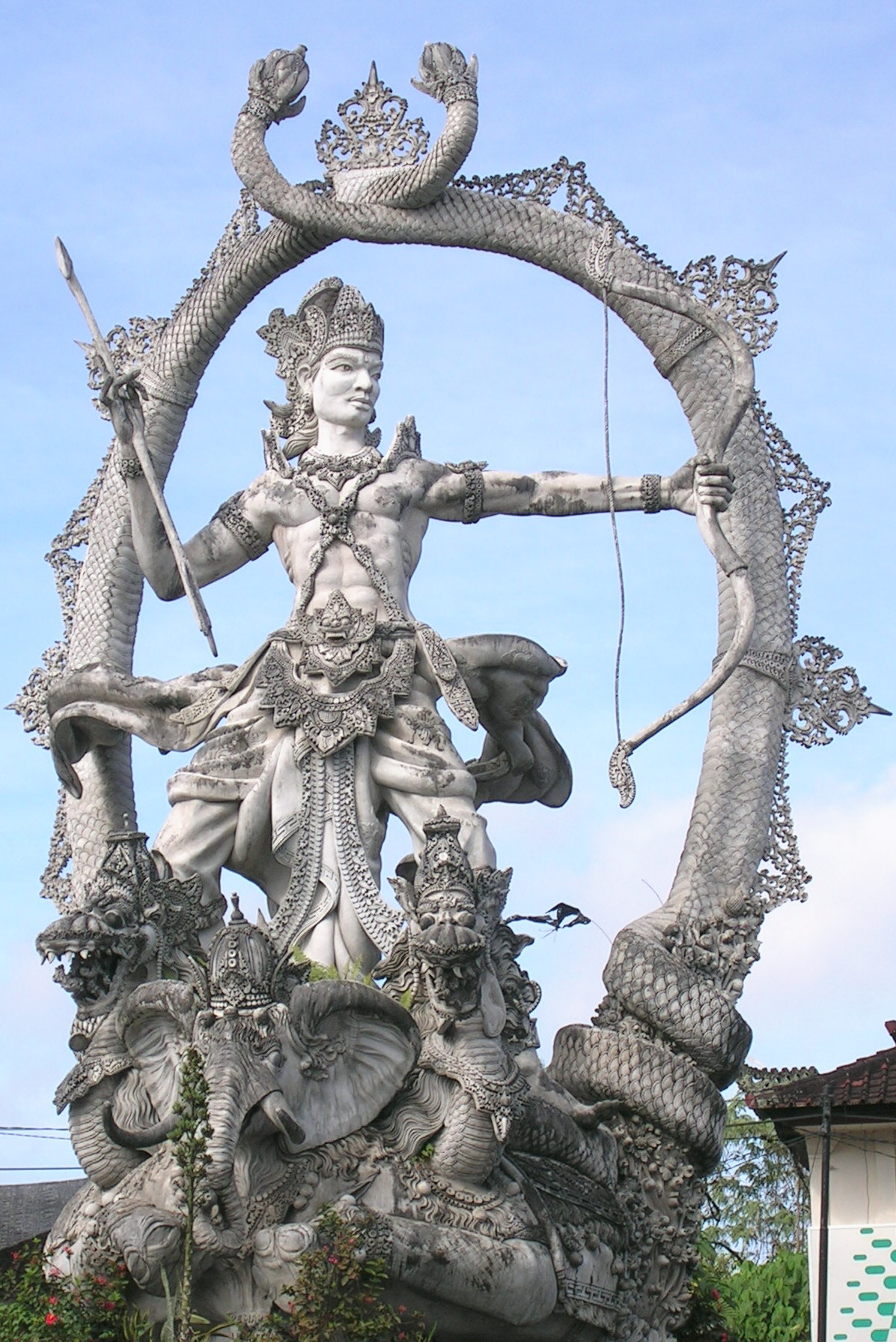
Reading Notes: Weapons for the Future, Part B

https://upload.wikimedia.org/wikipedia/commons/e/ee/Arjuna_statue.JPG 
Arjuna 
Picture by: Ilussion
Source: Wikipedia 

I feel the character of Arjuna is very interesting because of the weapons he gets are symbolic to the development of his personality. I like how Arjuna is basically on an adventure while getting these weapons. Urvashi falls in love with him, he learns new dances, and he even deals with a curse cast on him—all things that happen throughout his journey. I think this concept of adventure and journey is something I could use in my own story to build my characters. I would also like to use weapons to represent a piece of Arjuna’s personality as he continues his trip.

Urvashi is character I would like to keep in my story because she reminds me of an evil twin sister in fairy-tales I used to love watching and reading. She is considered one of the prettiest, but she has a bad influence on people. I would like to use her character to represent human emotions in Arjuna such as feeling attraction towards something that may not be the best for them because lets face it, we’ve all had our moments where we give people benefit of the doubt.

Benefit of the doubt is the lesson I want to include in my own story through Arjuna’s character. I think the weapons will tie in really well with how this lesson is learned. I think this will be a fun story to portray because it will have a little bit of everything—bravery, love, mistakes, and action. I’m excited to put this story to work! I want my story to be a little different when it comes to his journey. Arjuna’s character in my story will have to go through many obstacles to gain a number of weapons that he will pass down to his future kids. I would like to use foreshadow in my story, as well. 

Bibliography: Narayan's Ramayana, Reading Guide B 


Wednesday, February 8, 2017

Reading Notes: SIta Sings the Blues, Part B

File:Agni pariksha.jpg 
 Sita and Fire
File from Agni Pariksha 
Source: Wikipedia

After viewing Sita Sings the Blues by Nina Paley for Part B, I better understood the Ramayana, and saw a new perspective on the story. I also really enjoyed how there were characters interrupting the story to argue about what actually happened—this gave the story a more in depth look of why Rama, for example, wanted to abandon Sita. Before the audience even had a chance to be angry at such a ridiculous way of treating someone Rama was once in awe for, the argument suggested ideas of why Rama was doing this. After all, he does have the title of “king” to uphold. However, I still did not think it was okay to want Sita to be alone in the middle of nowhere.

There is a portion in Part B of the film where Sita thinks karma is coming back for her. This is something I want to include in my story. Karma is a very important concept to teach and know in the Hindu religion, so it’s something I can play with for my story. After Rama comes back, he asks Sita to prove her purity….again. This time, I was actually angry. I think I can portray my anger for Rama’s actions through karma.

I’m excited to rewrite this story because the elements from the film can be changed up with extra twists and turns, and I can easily add my personal touch of the importance of karma in my story. Sita’s faithfulness for Rama, even after her sons are born is something I would want to include, as well. I feel like Sita is never at peace because Rama keeps “testing” her. I would want her sons to play a bigger role in Rama and Sita’s relationship. I think these are some elements that will make my story different.

Nina Paley. Sita Sings the Blues. Reading Guide B 

Tuesday, January 31, 2017

Reading Notes: Ravana and Maricha, Part B

The Death of Maricha.jpg 
The Deer
Picture by: K. Venkatappa taken from Myths of the Hindus and Buddhists (1914)
Source: Wikimedia

The symbolic usage of the deer was something that really stood out to me in this story. Before reading the story, I wondered why a deer was chosen to represent something Sita was in awe towards. However, the imagery of the “golden deer” in the story helped me visualize the beauty of the deer. I imagined it being cute with pretty brown fur, and bright eyes. I would like to change this up with a different creature that is also considered to allure people by beauty.

The development of jealousy was also something I enjoyed reading in this story. Jealousy is one of the seven basic emotions. I have done research in different emotions that are considered to be universal even if some features are different from others. I would like to play on this concept in my story through Sita’s beauty. Ravana projects the absolute need for Sita to be his, and I want to change this up by Ravana forcing Sita to fall in love with him through a curse, and build a plot from that. I want Sita to also be considered the villain for a bit. I found it interesting to see how Ravana couldn’t touch any women unless he wanted to die. To me, this is an exaggerated version of respecting women. I also want to include Ravana’s limitations of this, but make it more of a long-term consequence rather than an instant death.

I think this story will be interesting to change up because there are so many different ways to project jealousy and desire—both jealousy and desire are something most of us encounter, but if not controlled they can lead to negative outcomes. For Ravana, this was dying if he touched Sita. I want the consequences of these two concepts to be shown as a lesson to learn. However, I want to change the setting, and have Sita be more powerful than Ravana.

Bibliography: Narayan's Ramayana, Reading Guide B

Tuesday, January 24, 2017

Reading Notes: Ravana's Sister, Part B


The humiliation of Shurpanakha 
Shurpanakha
Picture by Mackenzie, Donald Alexander
Source: Wikipedia

I enjoyed reading the desperate character of Shurpanakha. I found this character to be the most interesting to read about in this story because she has no standards for herself, and it was sad to see this portrayed in the story. She left no room for respect for women.

In my story, I want to play off this desperate character, and bring in some magic. Shurpanakha puts Rama under a spell. This spell will later develop into the plot of the story. There will be a magical place for these two characters. However, the twist in this story will be a lesson for all girls. I want this character to really project what low self-respect means. I want there to be scenes of magic and hurt. However, I don’t want to lose the concept of desperation in my story.

I liked the dramatic imagery of Shurpanakha’s body parts being cut off to represent her external beauty decreasing. Being beautiful on the outside is still such a hot topic in our society to this day. I feel like I can portray the concept of internal beauty through my story. I believe the idea of what is considered beautiful is universal. I want to play off what the world feels is beautiful through Shurpanakha’s character. Personification will be used with nature to show beauty.

Rama is still going to be a character, but he will not be seen as the main character in my story because I want my story to be focused on the female character, and topics most women are faced with. I think this original story of Ravana’s sister shows certain issues females still face in our society in a more dramatic way. I hope to make this even more dramatic, and show real life topics and concerns with my unique touch. 

Bibliography: Narayan's Ramayana, Reading Guide B

Monday, January 23, 2017

Reading Notes: Sita, Part A

Sitas Exile by Raja Ravi Varma (1848 - 1906).jpg 
Sita
Picture by Raja Ravi Varma
Source: Wikipedia

For this post, I decided to read Sita. Love at first sight is a concept, we’ve all heard about, or have even experienced. However, the story of Sita and Rama seems to show how intense this concept is. They take love at first sight to a whole new level. I enjoyed reading the dramatic scenes of the story. However, I want to make my story more dramatic and suspenseful.

After reading about their story, I want to add my own touch and make it a little bit more dramatic by adding in another character named Ria. I feel this additional character will cause some issues between Sita and Rama. Instead of the bow being bent by Rama, Ria and Sita will be asked to perform some sort of task. There will be a certain task with some rules, and the plot will develop from this concept.

After trying to understand how Rama and Sita feel about each other, I decided to make my story connect with my audience through the different events between the characters. I want to share how Ria, Sita, and Rama feel about each other. My story will also include more places for the story to develop and bring in imagery and symbolism. I want to use a traditional Indian dish as the symbol instead of the bow for the task.

My overall goal for this story is to have the girls take charge. I feel this will be a surprise element instead of the stereotypical plot where the male character is seen as the “hero.” However, Rama is still the king—one everyone admires. I hope to make my story stand out by keeping the characters the same, but with different twists, turns, and tasks! I am going to have fun with this dramatic concept, but still keep the love story alive between Sita and Rama.

Bibliography: Narayan's Ramayana, Reading Guide A